

"After extensive market research, one company stood out – ASCO from Switzerland."
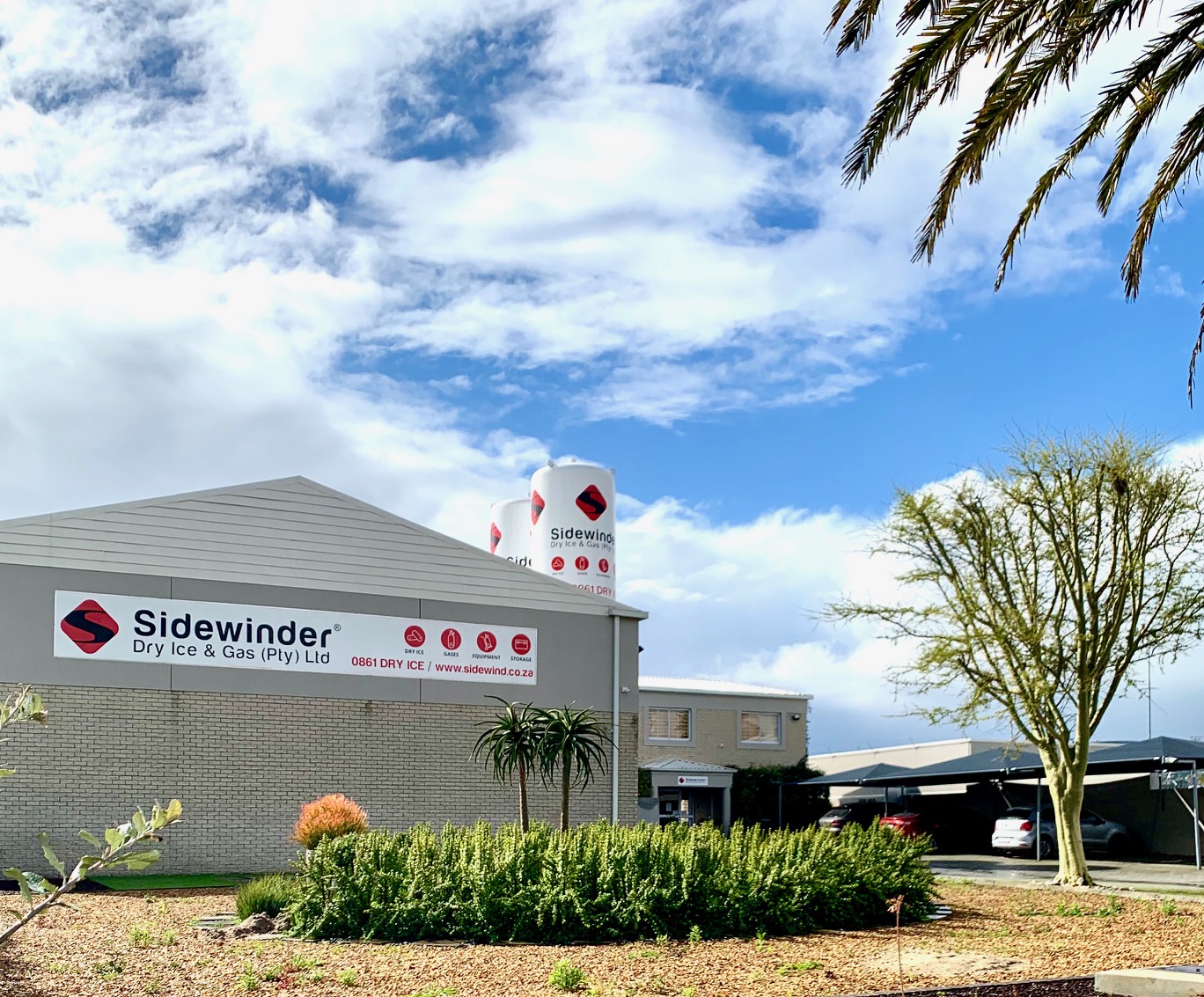
1. Sidewinder Dry Ice & Gas (Pty) Ltd was the first producer of dry ice pellets in South Africa. What were the first applications for dry ice pellets?
When we first surveyed our local market in 1997, there was only one supplier of dry ice in the Western Cape. This supplier could only produce large blocks of poor quality with a soft sponge-like interior. Dry ice production was not the company’s core business. Consequently, service and availability were not entirely satisfactory. Orders had to be placed several days in advance, and the ordering process was difficult and unreliable. There was no option for dry ice delivery, so customers had to collect the dry ice from a large, unhygienic facility in an old industrial estate. As food-grade certification was not possible, this dry ice was mainly used by ice cream vendors (to cool ice cream packaging), and total dry ice sales in the Western Cape region were therefore limited.
After conducting a thorough analysis of the local market, we realised that there was a need in the Western Cape region for a specialist dry ice manufacturer offering high-quality, certified food-grade products. Within our region, there were potentially different markets, and each market required different forms of dry ice for different applications.
We studied our local wine industry, which is over 350 years old and widespread in our province, in detail. South African wineries look back on a long and proud history of growing fine grapes and producing excellent wines. However, our end product (the wine) was often negatively affected by shortcomings in quality management during winemaking. Probably the biggest area of concern at the time was the excessive oxidation of the harvested grapes, followed by excessive oxygen uptake during the crushing, pressing, pumping and blending of the grapes. Ultimately, we concluded that our grapes were generally of exceptional quality, that our terroir was unique and special, and that our local winemakers were extremely talented, but that their final product was often affected by problems that could be easily resolved.
Our approach to this problem involved conducting trials with 3 mm dry ice pellets, which had the advantage of being able to sublimate rapidly into a cold, dense layer of CO2 gas that would act as a ‘protective blanket’ around the harvested grapes and also within the wine tanks. This CO₂ blanket could help to insulate the grapes, the juice and the wine from excessive exposure to the air – which contains 21% oxygen – and in this way, control and limit oxygen uptake, known in the industry as oxidation. We realised that our use of 3 mm dry ice pellets was a practice that could easily become an integral part of the winemaking process and would not entail too much additional effort or cost.
The wine industry in the Western Cape region was our first market for our newly launched products. We then expanded the business further and worked with our customers to help them develop an optimal dry ice solution that would assist them in achieving efficiency gains and maintaining product quality.
2. Which industry is currently the largest consumer, and what type or form of dry ice is most commonly purchased?
The wine industry remains our largest single market today. Originally, the majority of their dry ice requirements were for 3 mm pellets, but over the last 22 years we have worked with many wine producers as well as our local academic institutions to develop other new applications within the wine industry that require our 16 mm pellets, our 2.5 kg blocks and occasionally even our 1 kg slabs.
3. South Africa is famous for its excellent wine. Sidewinder Dry Ice & Gas (Pty) Ltd was the company that introduced this product application to the wine industry in the Cape in 1997. Originally, they supplied just three wineries, but since then they have grown significantly and now supply over 400 wineries across the region. That’s very impressive – please tell us more!
When we first introduced our 3 mm dry ice pellets to the wine industry, we encountered some resistance from the winemakers. Back then, the winemakers were mostly ‘older gentlemen’ who had been making wine in a certain way for many years and were resistant to change. The fact that South Africa had been isolated for years due to our previous political situation didn’t help matters, as many of the goods we produced were not allowed to be exported due to trade sanctions imposed by other countries. When the global export market opened up to South Africa following the first parliamentary elections in 1994, South Africans were confronted with the reality that, in order to sell our products abroad, we had to supply products that at least met the standards of the time, or even exceeded them. The wine industry was a perfect example of this.
Fortunately, we were in contact with three visionary winemakers who had recognised that the quality and market perception of South African wines needed to be improved through new ideas and technologies in order to succeed abroad. These three winemakers saw the potential and agreed to trial the use of our 3 mm pellets for their 1999 vintage. The following year, all three wineries won double gold Veritas awards for their wines. That was the turning point for our company, as the market suddenly recognised the potential of how our dry ice products could help them, and orders began to come in.
4. How many kilograms of dry ice do you produce per day?
The market in the Western Cape is highly seasonal, with the summer months from November to the end of April being our peak season. The grape harvest usually begins shortly before the start of the year, depending on weather conditions. The first three months of the year are our busiest period, and daily production and distribution usually amounts to several tonnes of dry ice per day. The winter months, particularly June to August, are the quietest, and daily production is significantly lower than the summer peaks.
As you can imagine, this kind of seasonal fluctuation in demand poses serious challenges for any business. Consequently, we have had to learn to adapt and have developed several other businesses and sources of income (unrelated to dry ice) to support us during the quiet winter months.
5. With your ASCO dry ice machines, you produce pellets of various sizes, as well as discs. These discs can be packaged using your ASCO dry ice packaging machine on request. Do you supply airlines with these packaged discs?
We supply airline catering services with our uniquely packaged 1 kg dry ice discs. When we looked at various manufacturers of dry ice production systems, we realised that we needed systems capable of producing a range of dry ice products, as our customers had different requirements. The ASCO BP407 dry ice production machine was the perfect machine to help us achieve this goal. We also purchased an ASCO APM dry ice packaging machine to package our 1 kg dry ice discs in accordance with international IATA requirements for the airline catering industry.
6. How far do you deliver dry ice to your customers? Do you have customers outside South Africa?
We generally have a delivery radius of around 150 km from our production facility. For customers outside this radius, we work with several specialist logistics companies to ensure our dry ice is delivered fresh daily.
7. How do you deliver the dry ice?
We deliver our dry ice in insulated containers that hold up to 30 kg of dry ice pellets or discs. For deliveries, we have a minimum order quantity of one box, i.e. 30 kg. In addition to our 30 kg box, we also offer a range of smaller storage boxes that can hold either 15 kg, 8 kg or 4 kg. We can also supply in bulk, in our specially developed rotationally moulded insulated containers, which can hold up to 240 kg. Many of our customers collect their orders from us in person, and these customers either provide their own insulated storage boxes for filling or we deliver the dry ice in one of our insulated boxes. We sell dry ice directly to end consumers, including in 1 kg units. Our philosophy is that all customers are important, whether they buy a tonne of dry ice – or just 1 kg!
8. The current global Covid-19 situation has drastically changed the behaviour and consumption patterns of businesses and individuals. How has this affected your business?
Like most businesses, we have certainly felt the impact of COVID-19 on our operations. As a dry ice supplier to several medical facilities and laboratories, our company was classified as a ‘supplier of an essential service/product’. Consequently, we were permitted to continue operating during South Africa’s strictly enforced lockdown. However, most of our customers were closed, and this had a fairly significant impact on our business.
9. How is Sidewinder Dry Ice Gas & (Pty) Ltd organised?
After 23 years in business, we recognise the importance of ‘human capital’ within our company. We strive to offer a world-class product, combined with efficient and friendly service. Our company motto is: “When it counts, we’re there”. This kind of consistent service is only possible with a dedicated and motivated team. We have a small, integrated team, as our production process is automated – thanks to our ASCO machines. Our team is like a family; we all support one another and recognise that each of us contributes a valuable skill to our customers’ supply chain. We have a flat management structure with two directors, an administrative team in the office, a production team and a logistics team that handles all daily deliveries and the associated customer requirements. We have an open-door policy and encourage constant dialogue between team members to ensure we are always up to date and prioritise our customers’ needs.
10. You are a long-standing ASCO customer – what do you value about the ASCO portfolio?
Before investing in our dry ice production equipment, we carried out extensive research into equipment suppliers from the USA, Europe and Asia. Our main priorities were that we wanted modern, efficient and reliable machines from a company that offers excellent customer service and spare parts availability. We also wanted systems that could produce various forms of dry ice easily and efficiently. After much market research, one company stood out – ASCO from Switzerland. To this day, we have enjoyed a long and successful relationship with ASCO, and we regard ASCO as our partner for all our dry ice production equipment needs.
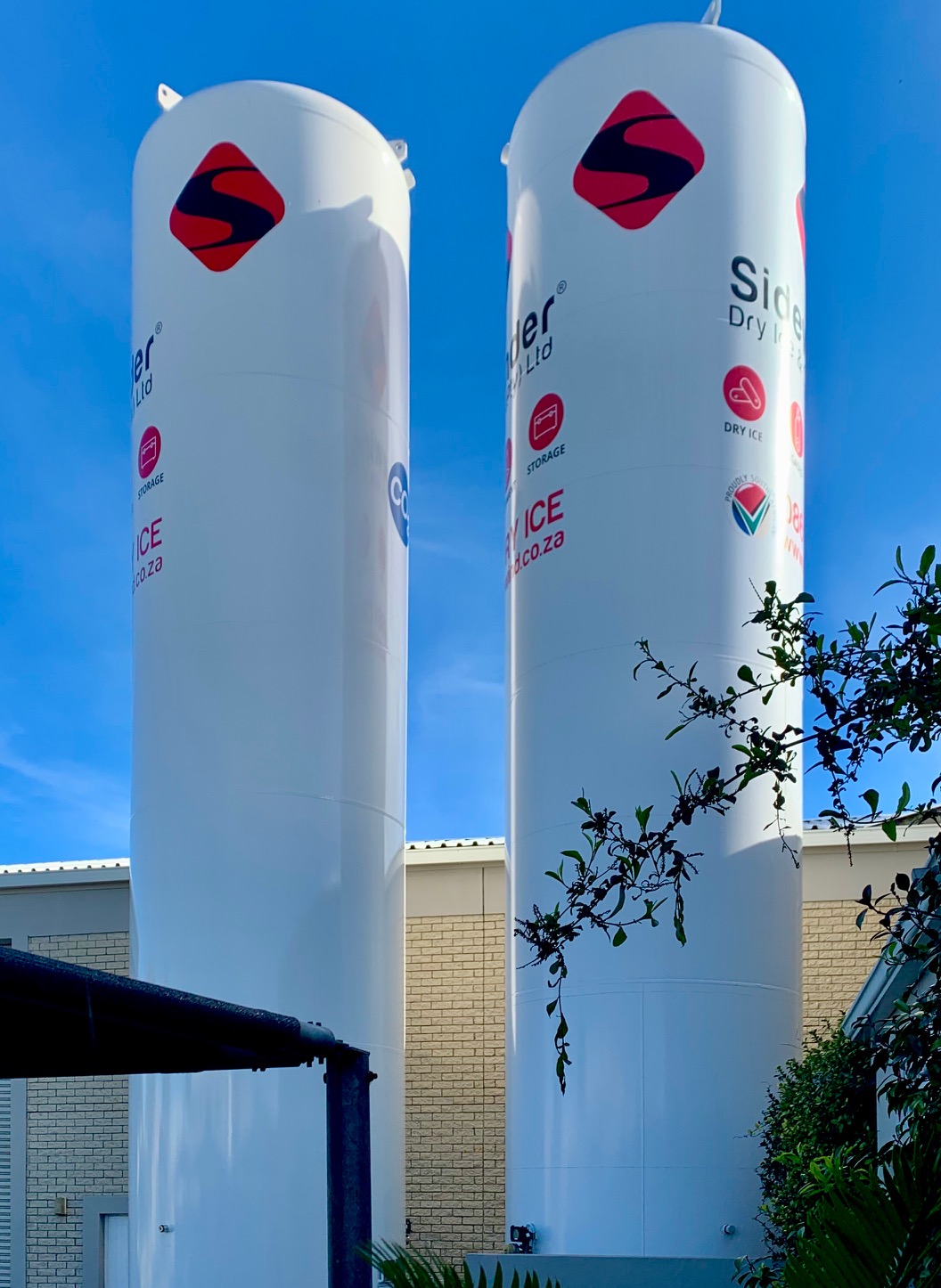
Caption: CO2 storage tanks at Sidewinder Dry Ice & Gas (Pty) Ltd
 General Question
 +41 71 466 80 80
 info@ascoco2.com
 Newsletter
 LinkedIn