

The history of CO₂: from industrial waste product to vital resource

When was CO₂ discovered?
The history of carbon dioxide begins in the 17th century with the Flemish chemist Jan Baptist van Helmont. He carried out experiments with burnt wood and discovered that a ‘wild gas’ was produced, which he called ‘gas sylvestre’. This discovery laid the foundation for the later understanding of CO₂. In the 18th century, the Scottish chemist Joseph Black continued to research the gas and gave it the name “fixed air”. He found that CO₂ is heavier than air and does not contribute to combustion. His experiments led to a deeper understanding of gases and paved the way for modern chemistry.
With the advancement of chemistry and the introduction of a standardised nomenclature, CO₂ came to be described as an oxide of carbon. In German, this eventually became Kohlendioxid – meaning ‘the oxide of carbon with two oxygen atoms’.
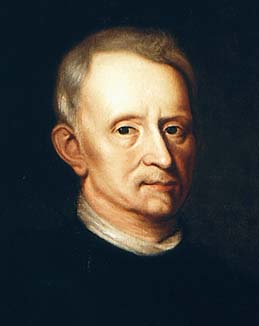
(Historical depiction of Jan Baptist van Helmont from the 18th century. Symbolic image representing the discovery of CO₂ and the development of modern chemistry, source: Wikipedia)
CO₂ in the Industrial Revolution
With the onset of the Industrial Revolution in the 19th century, human-generated CO₂ emissions rose sharply. The combustion of fossil fuels in factories and power stations led to a significant release of carbon dioxide into the atmosphere. At that time, however, CO₂ was scarcely perceived as a valuable resource – it was merely a by-product of industrialisation. It was not until the late 19th century that people realised CO₂ could have a wide range of applications. In the drinks industry, the gas began to be used for the carbonation of mineral water and soft drinks – a process that remains widespread to this day.

(Sparkling drink with ice cubes in a glass – symbolic image of the use of CO₂ for carbonation in the drinks industry. Source: freepik – rawpixel.com)
CO₂ as a component of industrial processes
In the 20th century, CO₂ became increasingly important in various industrial processes. In the food industry, it was used in its solid form, ‘dry ice’, which has a temperature of almost -80 degrees Celsius, as a coolant for frozen and fresh products. Also in the “Food & Beverage” sector, carbon dioxide is frequently used in so-called PEX systems (= Pressure Expansion) for pest control. In this process, the goods to be treated are exposed to high pressure of up to 30 bar for a certain period of time with the addition of CO₂. The sudden release of pressure kills all storage pests (e.g. beetles, moths, mites) and their larvae and eggs without impairing the quality of the goods in any way. This food-safe process leaves no residues and is toxicologically harmless.
Carbon dioxide is also frequently used in food preservation to displace oxygen (O₂) from food packaging, thereby maintaining freshness and extending shelf life.
In the chemical industry, CO₂ has been used in large quantities for the production of urea – a key component of fertilisers for agriculture.
Furthermore, since the 1960s, CO₂ has been specifically used in greenhouses to promote plant growth and increase yields. Enriching the air with carbon dioxide can significantly boost the photosynthetic capacity of many plant species. This leads to faster growth and higher productivity, particularly in light-intensive crops such as tomatoes, peppers or cucumbers.
Drinking water treatment thanks to CO₂
In many regions of the world, desalination of seawater is the only way to obtain drinking water. However, the conversion of salt water into usable drinking water is a complex process – in particular, regulating the pH level after desalination is crucial for water quality. This is where carbon dioxide (CO₂) comes into play: It is specifically used for pH adjustment to bring the water to a neutral level and prevent corrosion in pipes. To ensure a reliable and sustainable supply of CO₂, on-site recovery plants are often integrated into such projects (where possible). This solution offers environmental and economic benefits and secures the supply of high-quality drinking water – even in water-scarce regions.
CO₂ and climate change
With growing awareness of climate change, CO₂ has come under increased scrutiny as a so-called “greenhouse gas” with negative effects. In the 1950s, scientists such as Charles Keeling began systematically measuring the rise in CO₂ concentrations in the atmosphere. The Keeling curve, which shows the steady rise in CO₂ levels, remains a key symbol of climate change to this day.
The debate surrounding CO₂ has shifted: whereas it was previously regarded primarily as a useful gas for the industrial processes mentioned above, it is now increasingly associated with environmental problems. This has led to a rethink in politics and industry, which are seeking ways to reduce CO₂ emissions. In this context, policymakers are focusing on various solutions to reduce CO₂ emissions: the expansion of renewable energies such as wind, solar and hydroelectric power is intended to replace fossil fuels. Work is also underway on technologies such as Carbon Capture, Utilisation and Storage (CCUS), in which CO₂ is captured, stored or reused – for example in industry or in the production of building materials. Measures to save energy, electromobility and the restructuring of industrial processes also play a central role in national and international climate strategies.
CO₂ as a key resource for new applications
In recent years, the view of CO₂ has shifted once again. Instead of seeing it merely as a climate-damaging greenhouse gas, researchers and companies are working to utilise CO₂ as a valuable resource. Technologies for carbon capture and storage (CCS) and carbon utilisation (CCU) are becoming increasingly important. Modern applications include the production of synthetic fuels for cars (eFuels) and aircraft (SAF – Sustainable Aviation Fuels), the use of CO₂ in concrete production to reduce cement consumption, and the development of biological processes in which microorganisms convert CO₂ into valuable chemicals. These innovations could help to reduce CO₂ concentrations in the atmosphere whilst promoting sustainable production processes.
Conclusion
The history of CO₂ illustrates how our perception of a gas has changed over time. From an unremarkable chemical discovery, through an industrial by-product, to a valuable resource – CO₂ has undergone a remarkable evolution. Whilst the challenges of climate change remain, modern technologies offer new opportunities not only to reduce CO₂ but also to actively utilise it for a sustainable future.
You might also be interested in


 +41 71 466 80 80
 info@ascoco2.com
 Newsletter
 LinkedIn