

Data Centers and CO₂ Recovery: Why the AI Boom Creates New Opportunities for Carbon Capture
Why data centers are becoming a new market for CO₂ recovery
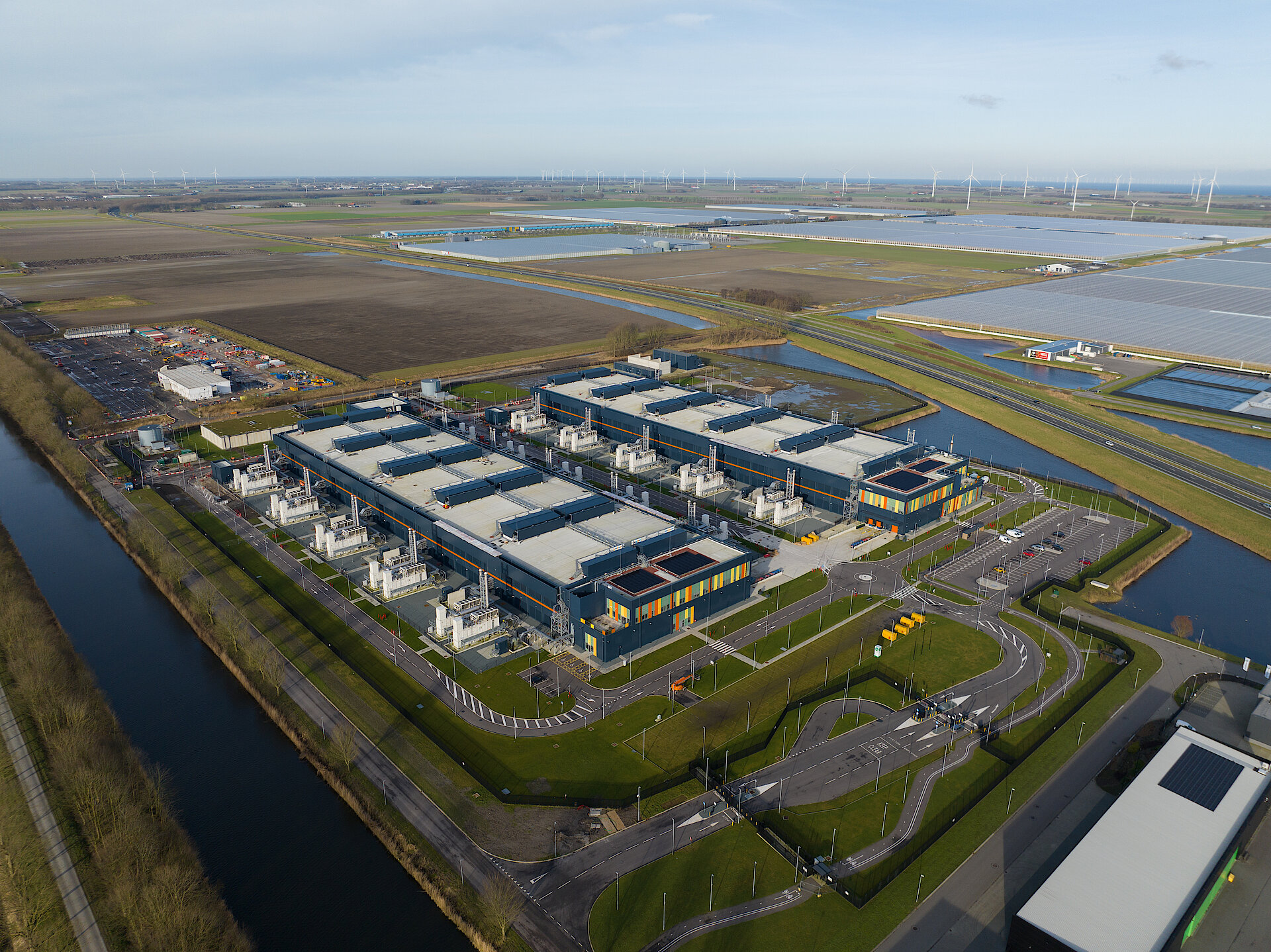
Data centers are among the fastest-growing infrastructures in the modern economy. With increasing digitalization, the expansion of cloud-based services, and the rapid growth of AI applications, their energy demand continues to rise. This is shifting the discussion: alongside electricity consumption and energy efficiency, the question of how resulting CO₂ emissions can be reduced or even made usable is moving increasingly into focus.
This opens up a new field of application for CO₂ recovery. What is already established in various industrial sectors today could also play an important role for data centers in the future — especially where energy is generated directly onsite and CO₂ is available in clearly defined exhaust gas streams.
AI boom, rising energy demand, and the new challenge for data centers
The requirements placed on data centers are changing fundamentally. AI applications in particular require enormous computing power and therefore significantly more energy than conventional IT workloads. For operators, this means that energy supply is no longer just a technical side issue, but is increasingly determining site selection, expansion speed, and long-term competitiveness.
Industry forecasts suggest that electricity demand from data centers in the United States could more than double by 2030. At the same time, new capacity must be made available ever more quickly to keep pace with demand. (Sources: [carbonherald.com], [bloomenergy.com])
For many operators, available grid capacity is becoming the limiting factor. New data centers often cannot be connected to the power grid quickly enough, while demand for computing power continues to rise. This is making local power generation increasingly important, as it creates additional planning certainty and makes projects less dependent on external grid bottlenecks.
The trend toward onsite power generation: why more data centers are relying on onsite power
To avoid grid bottlenecks and implement projects faster, more and more data centers are investing in onsite power generation systems. These include gas-fired generators, combined heat and power plants, and fuel cell systems. For operators, this is not only about additional capacity, but above all about availability, redundancy, and a more controllable energy supply.
According to a recent industry survey, 61% of developers would rely on local power generation if grid capacity becomes a bottleneck. At the same time, market participants expect that around one third of US data centers could be fully powered by onsite power by 2030.
This development improves supply security, but also creates new CO₂ emissions directly onsite. Emissions management therefore becomes part of technical infrastructure planning — not as a downstream consideration, but already during the design of energy and supply systems.
41% of onsite-powered data centers plan to integrate CCUS by 2035 — what is behind this trend?
As onsite power generation increases, so does interest in technologies for CO₂ capture and utilization. The more data centers organize their energy supply themselves, the more directly they must address how the resulting emissions can be handled in a technically and economically viable way.
A recent study shows that 31% of data centers with onsite power generation already plan to use Carbon Capture, Utilization and Storage (CCUS) by 2030. By 2035, this share is expected to rise to 41%.
The figures clearly show that CO₂ management is increasingly being regarded as part of infrastructure planning. For operators, the issue is no longer just to provide enough energy, but to do so in line with sustainability targets, regulatory requirements, and economic conditions. CCUS is therefore moving from an isolated environmental measure to a potential component of the overall energy concept.
Where do CO₂ emissions actually arise in data centers?
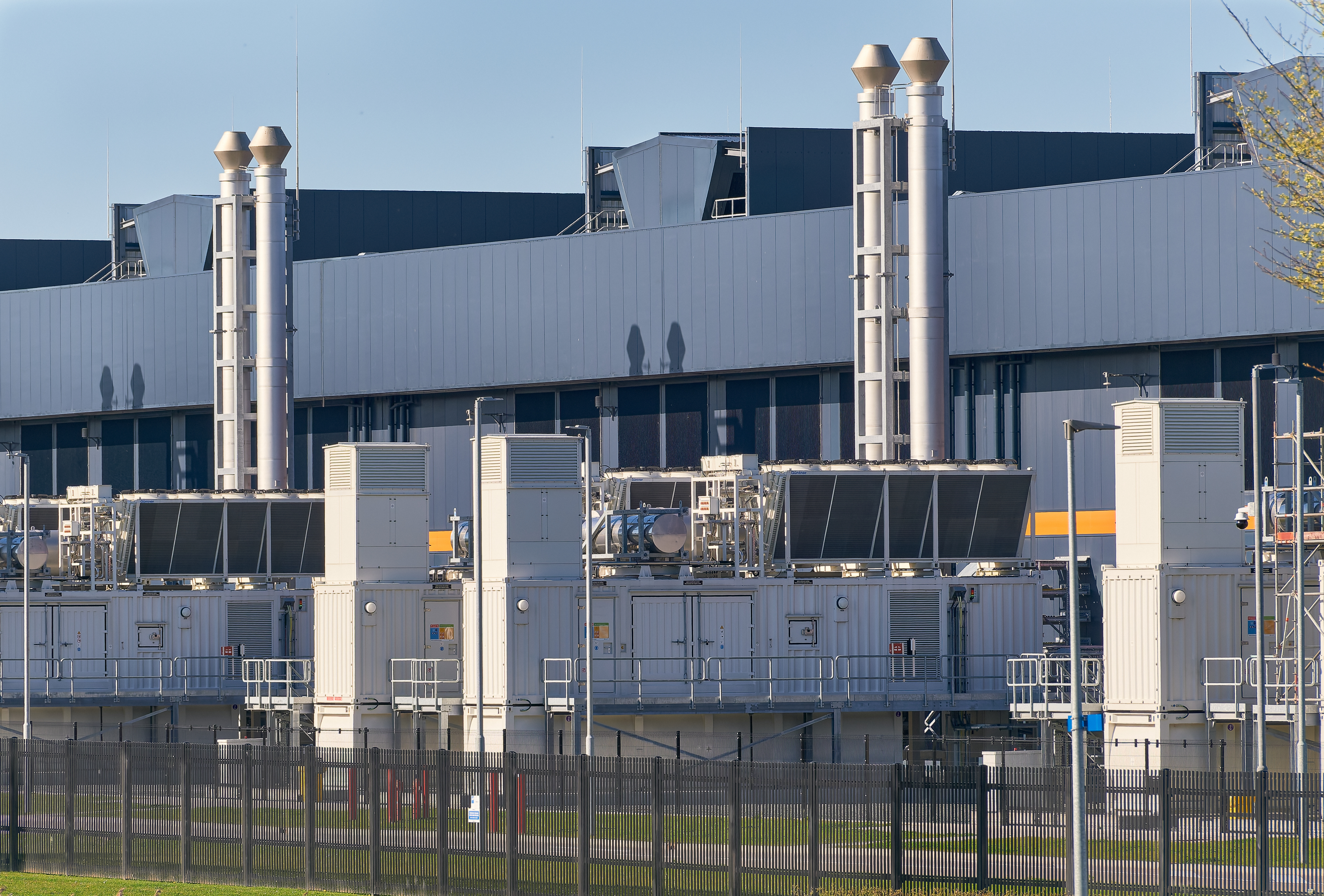
The IT systems themselves do not cause direct CO₂ emissions. These emissions mainly arise where energy is generated onsite — in the systems that provide electricity, heat, or backup capacity for operation. The more such systems are used continuously, the more relevant they become for the emissions profile of a data center.
Relevant sources include:
- Gas-fired generators
- Combined heat and power plants
- Turbines for power generation
- Continuously operated backup and supply systems
Because the emissions occur in clearly defined exhaust gas streams, they are generally well suited for technical CO₂ capture and processing.
From carbon capture to carbon utilization: CO₂ as a resource instead of a waste product
Modern CO₂ recovery goes far beyond simply capturing emissions. The key is not only to remove CO₂ from an exhaust gas stream, but to process it in such a way that it can be reused for industrial applications.
Recovered CO₂ can be purified, liquefied, and made usable for various applications. Examples include the food industry, e-fuels, water treatment, and dry ice production.
This creates a new approach to dealing with emissions: CO₂ is no longer viewed solely as a waste product, but as a usable raw material for further industrial processes. This approach becomes particularly interesting at sites where regional offtakers are available and short transport routes support economic use.
ESG targets, economic viability, and sustainability requirements as drivers
In addition to climate targets and regulatory requirements, economic considerations are also playing an increasingly important role. For operators, the decisive question is whether CO₂ recovery can be integrated into a robust overall concept — technically, operationally, and with regard to potential offtake markets.
Especially at sites with continuous CO₂ streams, recovery can help reduce emissions while also providing a usable raw material. Depending on regional demand, the recovered CO₂ can be used for internal processes or supplied to external customers.
For data center operators, CO₂ recovery is therefore increasingly more than a sustainability project. It can become a building block of a long-term decarbonization strategy while also creating the basis for new value creation opportunities. Decisive factors include realistic conditions such as CO₂ volume, purity requirements, logistics, and regional demand.
From energy-intensive data center to CO₂ circular economy
The next generation of data centers will not be defined solely by computing power and energy efficiency. Topics such as supply security, emissions management, and resource utilization are becoming increasingly important. This brings data centers closer to traditional industrial infrastructures, where energy flows, waste heat, and material streams are considered holistically.
The expansion of onsite power systems creates new industrial CO₂ sources. At the same time, modern recovery technologies make it possible not simply to release these emissions, but to integrate them into regional material cycles.
In the future, data centers could therefore take on a dual role: as digital infrastructure and as suppliers of a valuable industrial raw material. However, this requires CO₂ recovery to be incorporated early into site, energy, and sustainability concepts.
Conclusion: why CO₂ recovery is becoming a strategic option for data centers
The AI boom is changing the energy landscape of data centers. To meet rising power requirements, more and more operators are turning to local power generation. This creates new CO₂ sources directly onsite — and with them the need to think about energy supply and emissions management together.
This is precisely where the opportunity for CO₂ recovery lies. What is considered an emission today can become a usable resource in the future. For data centers, this creates the opportunity to combine sustainability targets, supply security, and circular economy principles.
A digital infrastructure can thus increasingly become an active part of a regional CO₂ circular economy. This development is still at an early stage, but it shows that data centers may in future be not only electricity consumers, but also relevant players in the industrial handling of CO₂.


 +41 71 466 80 80
 info@ascoco2.com
 Newsletter
 LinkedIn