

From rags and solvents to dry ice and air
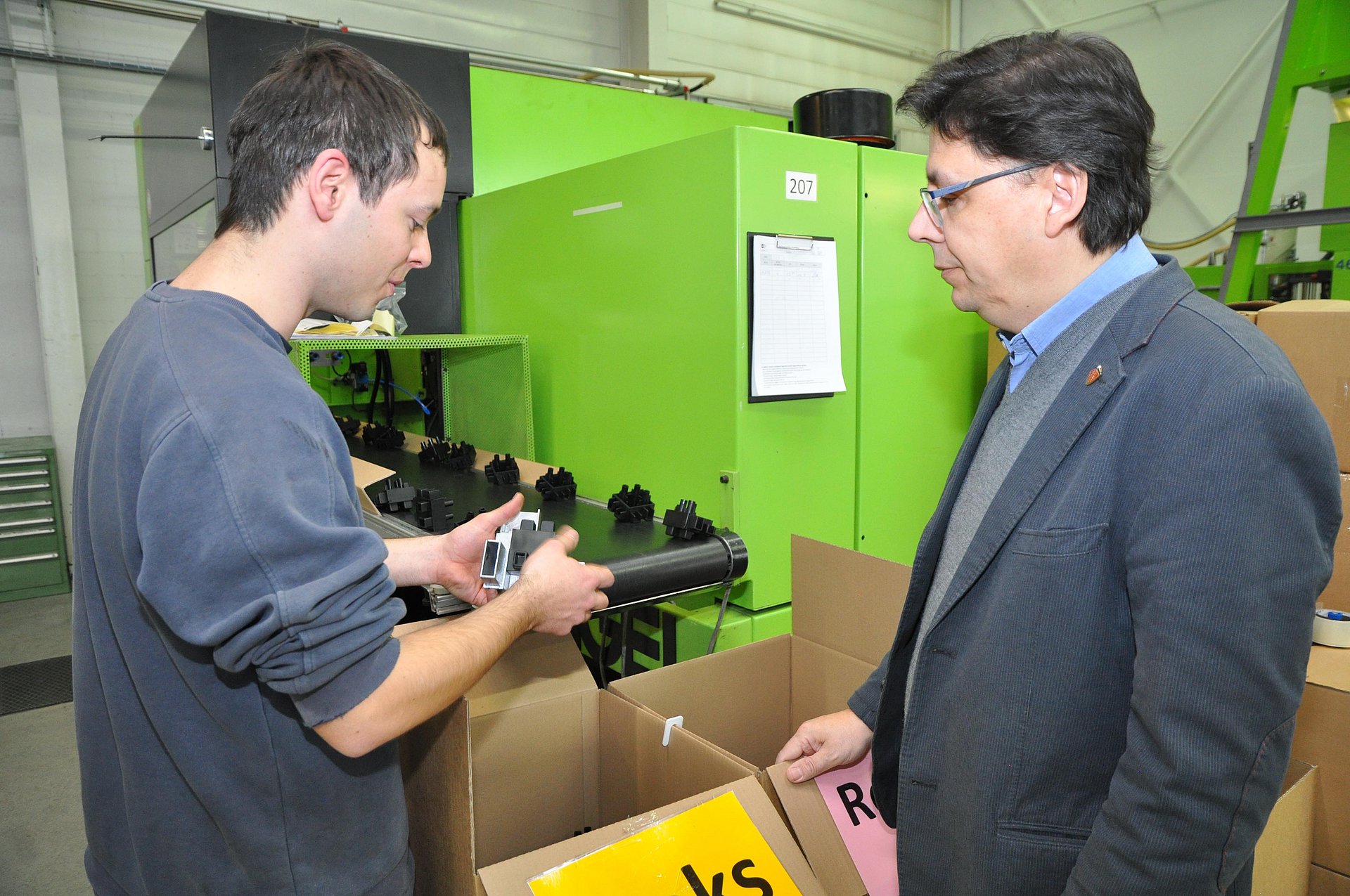
“We tend to clean the moulds earlier and achieve a consistent cleaning result – particularly with complex and delicate moulds,” says Daniel Bolliger, workshop manager at Stüdli Plast AG, summarising their initial experiences with the new cleaning method. “Above all, however, we are much faster than with conventional methods such as cloths and solvents,” Bolliger continues.
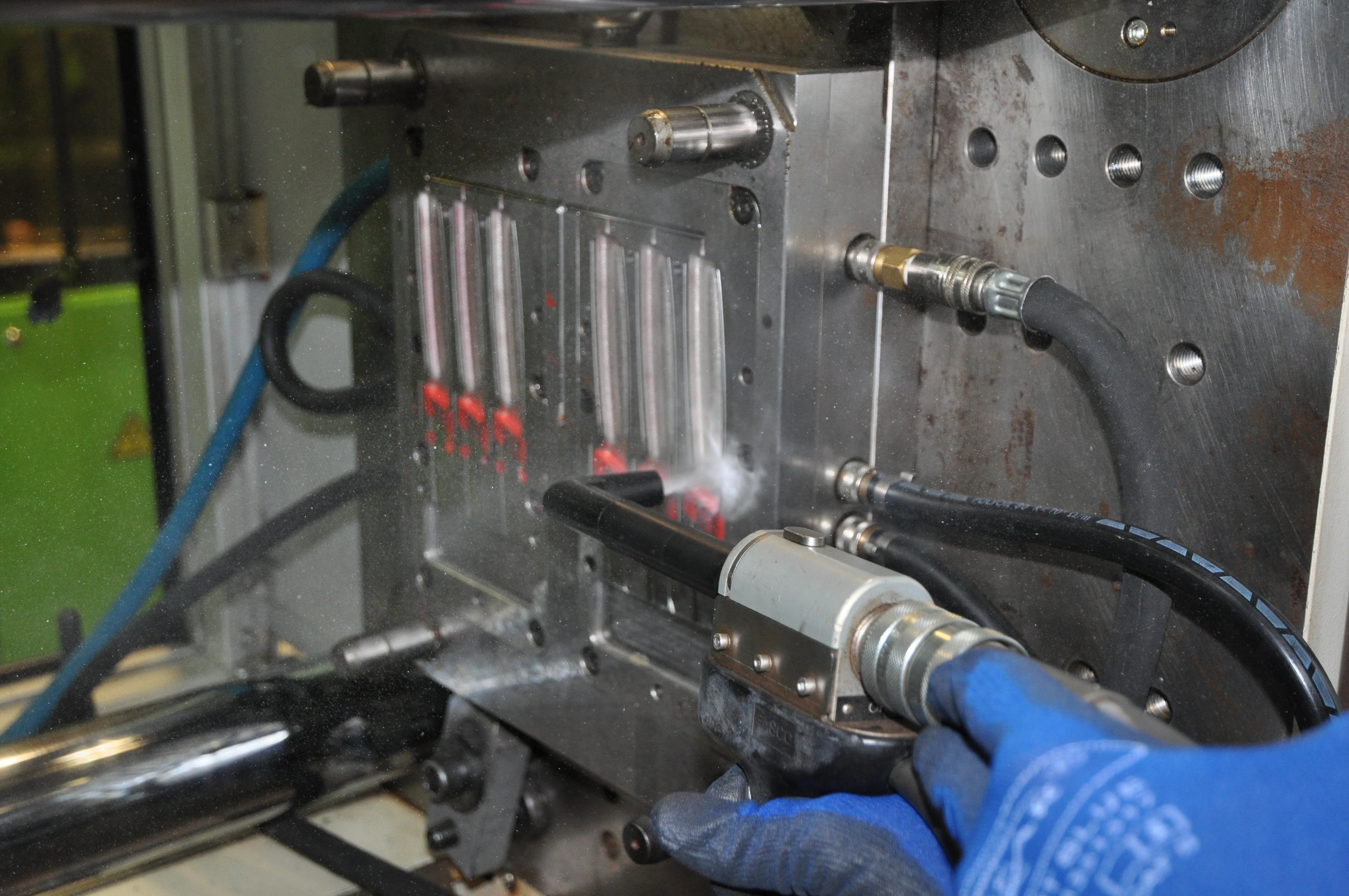
Following a thorough evaluation, Stüdli Plast AG decided to purchase an ASCOJET 1208 dry ice blasting machine from the Swiss manufacturer ASCO Kohlensäure AG. The compact machine was designed for industrial use and is characterised by its ease of use and high performance. The nozzle accessories, developed specifically for the plastics industry, enable effortless cleaning of injection moulds of all sizes and complexities, which generally makes it unnecessary to remove the moulds.
The advantages of dry ice blasting as a cleaning solution in plastic injection moulding are obvious. The combination of thermal and kinetic energy causes deposits or resin build-up to disappear immediately and without leaving any residue. And this is achieved without altering the geometry of the moulds or leaving behind residues of the cleaning agent. “The dry ice literally vanishes into thin air,” as Jose Fernandez concludes his explanation of how dry ice blasting works. Jose Fernandez is Area Sales Manager for Dry Ice Applications at ASCO Kohlensäure AG and assisted Stüdli Plast in evaluating the appropriate cleaning solution. The fact that tools do not need to be removed for cleaning, nor do high-temperature moulds need to be cooled down and reheated, is one of the key arguments in favour of dry ice cleaning for Jose Fernandez; a method that has now established itself as the industry standard, whether as a manual application or an automated robotic solution.
 General Question
 +41 71 466 80 80
 info@ascoco2.com
 Newsletter
 LinkedIn