

Novogas: "Dry ice has a bright future in Nigeria"
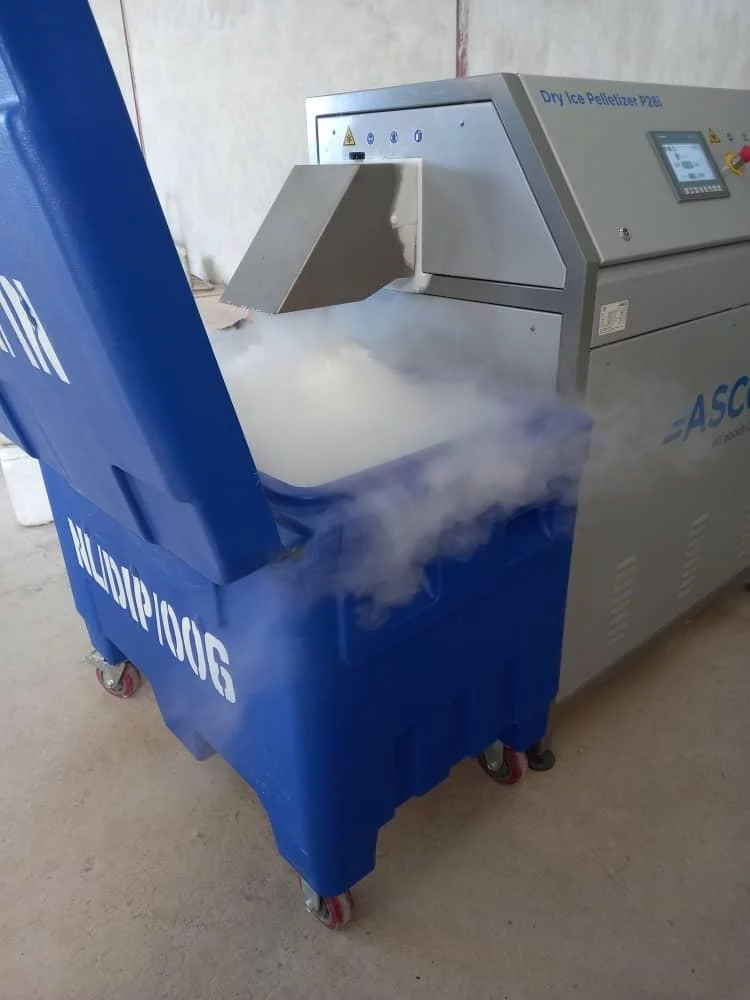
What was the reason behind your decision to purchase the ASCO P28i dry ice pelletiser?
We were contacted by a non-profit organisation that expressed an interest in purchasing dry ice for the preservation of Covid vaccines. Following this discussion, our management decided to purchase an ASCO dry ice pelletiser.
What is the significance of dry ice in Nigeria? What are the main areas of application?
So far, it has mainly been used for preserving seafood during transport, but demand is being fuelled by the Covid-19 vaccine.
Who are your main customers/sectors for dry ice?
At the moment, we sell exclusively through a distributor who has direct contacts with end users. This distributor buys large quantities from us and repackages them into smaller boxes.
How many hours a day is the P28i in operation?
Initially, the dry ice pelletiser ran for fewer hours than it actually could. On average, the P28i is in operation for two hours a day, but by the end of the year demand was so high that it had to run for at least ten hours a day in the second half of December.
Has the transport of COVID-19 vaccines had a major impact on dry ice production in Nigeria?
We cannot say, as we sell to a distributor who does not fully disclose the application to us. However, it stands to reason.
Are there plans to promote the ‘dry ice business’, e.g. by using dry ice blasting as a cleaning method?
At the moment, the main application of dry ice seems to be for food and perhaps for vaccines. We would need to discuss new applications with our customer.
What we can say is that it is important to control CO2 production in Nigeria so that we can become a more reliable dry ice supplier. Others have tried using a CO2 storage tank to store the CO2, but these are not reliable. Our ASCO P28i dry ice pelletiser is connected to a 50-tonne CO2 storage tank, which is supplied by one of our Plant No. 1 facilities, which produces 12 tonnes of CO2 per day.
 General Question
 +41 71 466 80 80
 info@ascoco2.com
 Newsletter
 LinkedIn