

Swiss company ‘BERNMOBIL’ relies on the ASCOJET 1701 for its fleet cleaning
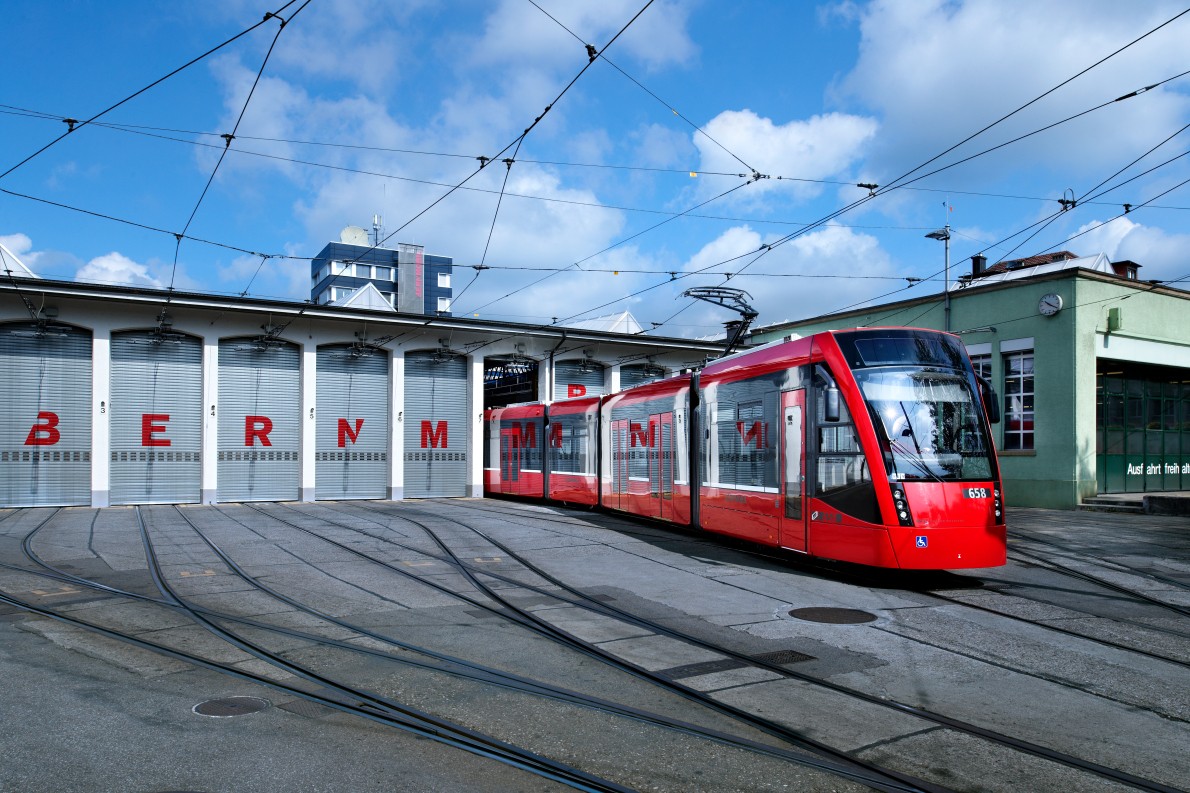
Cleaning time reduced by a factor of four
Until now, BERNMOBIL has cleaned the gearboxes fitted to the chassis by hand using brushes, cleaning cloths and cleaning agents. It took around one and a half hours per gearbox. Furthermore, the end result was not very satisfactory, as dirt residues remained and moisture got inside the gearboxes. Thanks to the ASCOJET 1701 dry ice blasting machine, BERNMOBIL now only needs a good 20 minutes per gearbox to clean it thoroughly. What’s more, the gearboxes remain dry inside.
The ASCOJET 1701 is also used when changing tyres. This is done every 280,000 km and is necessary to clean the ‘steel bands’ selectively with the ASCOJET 1701. This prevents the wheel bearing grease from being ‘washed away’, which could ultimately lead to seized lamellar rings and consequently to costly repairs.
Mr Michael Aufdenblatten (Tram Project Manager) from BERNMOBIL adds: “Dry ice blasting is a somewhat unfamiliar cleaning system in our industry, but one that offers many advantages, both technically and economically. We wouldn’t part with the ASCO dry ice blasting system for anything.”
ASCOJET dry ice blasting technology is a gentle and environmentally friendly cleaning method that leaves no blasting residue. Dry ice pellets (solid carbon dioxide) are used as the blasting agent; these are accelerated in the ASCO dry ice blasting machine using compressed air to a speed of approx. 300 m/s. These then strike the object to be cleaned, where they create a localised thermal shock. This causes the deposit to be removed to contract and detach from the base material. The dry ice blasting process is gentle and does not damage surfaces. Upon impact, the dry ice pellets immediately turn into a gaseous state (sublimation) and leave a dry surface behind, meaning no blasting media needs to be disposed of.
 General Question
 +41 71 466 80 80
 info@ascoco2.com
 Newsletter
 LinkedIn