

The Future of Dry Ice Production: Why Capacity Alone Will No Longer Be Enough by 2035
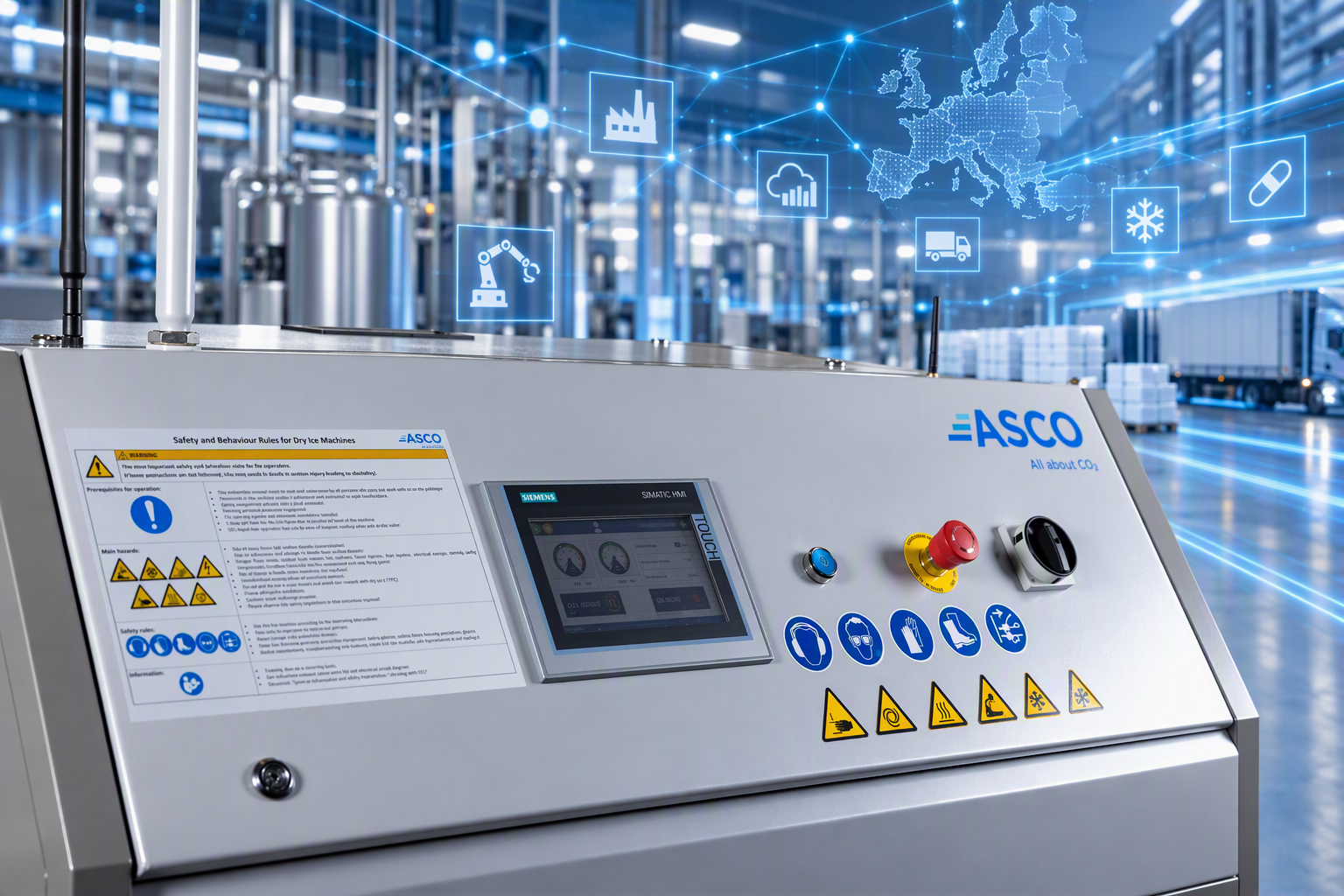
The dry ice market is growing, but growth alone is not enough
Market analyses identify demand drivers in areas including pharmaceuticals and biotechnology, food logistics and industrial cleaning. However, their forecasts for the size of the European market by 2035 differ considerably. For an individual production business, the development of the applications and customers it serves matters more than total sales volume. Depending on demand and the delivery area, regional production or production close to the point of use may also be an option.
A larger market is not necessarily a more predictable one. CO₂ availability and energy costs remain important operating factors. There is also the question of which applications customers will choose dry ice or alternative cooling systems for in the future. Growth can bring additional orders while also changing the requirements for fulfilling them.
Flexibility could become the real bottleneck
Two producers with identical capacity will not necessarily be equally successful in 2035. Dry ice is produced to order. Whether a business can take on an additional order therefore also depends on how it fits into the existing schedule. Smaller batches or short-notice changes in volume can make operations challenging, even when daily capacity is sufficient on paper. The form in which the customer needs the dry ice is another factor.
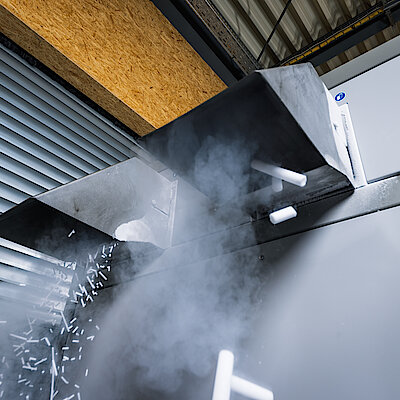
Pellets, nuggets and blocks place different demands on production. Even within these forms, the required sizes and dimensions vary by application. Producers looking to reach new customers or serve additional applications therefore need to assess whether their existing equipment can cover the formats in demand. Depending on the production solution, this may require modifications or the addition of further machines.
Flexibility therefore concerns both order fulfilment and the product range. As demand changes, producers need to be able to assess which volumes and formats they can reliably supply. For customers, this adaptability has a tangible benefit: their supplier can respond to different requirements without losing sight of existing delivery commitments.
Why connected dry ice production is becoming more important
These decisions require a reliable overview of operations. Recorded production volumes and operating hours provide visibility into actual utilisation. Information on equipment condition and service intervals helps with maintenance planning. Comparing this information with orders makes it easier to assess how much production time is available and where bottlenecks could arise.
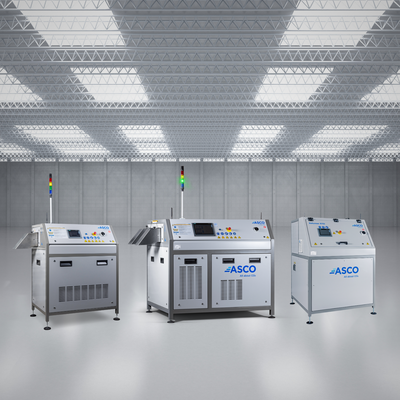
The value comes from using this data in day-to-day operations. Remote access, for example, can support servicing when a fault needs to be diagnosed. The ASCO EVO Series incorporates this approach to connected production through remote maintenance and data analysis. For operators, what matters is which decisions become easier as a result and which information is still missing. Where skilled staff are in short supply, access to technical support may also become more important.
Efficiency means more than production output
High hourly output says little about the cost of fulfilling an order. This requires consideration of CO₂ yield and energy use, as well as maintenance requirements and equipment availability. An unplanned shutdown can reduce available production time and affect subsequent deliveries. Reserve capacity therefore needs to be assessed differently from capacity that is barely usable under actual operating conditions.
The overall assessment also needs to include delivery to the customer. Even when produced to order, dry ice sublimates between production and use. Coordinating production with dispatch and considering transport distances therefore influences the usable quantity that reaches the customer. Producers seeking to improve the economics of their operations should assess these factors together. The largest plant is not necessarily the best fit for a business's order profile.
From buying a machine to a long-term production strategy
Production equipment is purchased for many years of use. During that time, the customer base, delivery area and CO₂ supply may change. Planning should therefore consider possible developments alongside current demand. A business producing dry ice for its own use operates under different conditions from a producer supplying several customers with fluctuating order volumes.
For a sound production design, the order profile and regional delivery routes should be assessed against CO₂ availability at the site. This also includes the dry ice forms and dimensions required today and those that may be needed in the future. These factors determine whether individual machines are sufficient or whether additional equipment is needed. Growth targets and the availability of skilled staff, in turn, influence the appropriate reserve capacity and service support. For ASCO, consulting in this context means selecting a production solution based on these operational requirements. This turns an investment decision into a production strategy designed to remain viable as demand changes.
The future of dry ice production starts before 2035
For individual producers, the exact size of the European dry ice market in 2035 is likely to matter less than their ability to meet changing customer requirements economically. Production output remains the foundation. Competitive advantages could emerge where companies understand their operations, use resources efficiently and incorporate new requirements into their planning early. They create the conditions for this through the decisions they make today.
Are you planning a new dry ice production facility or looking to modernise existing equipment? ASCO helps you translate today's needs and potential future requirements into a suitable production solution.
FAQ

How will dry ice production change by 2035?
Dry ice production is expected to focus more on flexibility, efficiency, and digital support. While production capacity remains important, factors such as CO₂ availability, energy efficiency, adaptability to fluctuating orders, and the use of production data are becoming increasingly important.
Why isn't high production capacity alone enough?
A high daily output does not automatically guarantee economic success. Producers must be able to reliably fulfill short-notice orders, produce various shapes of dry ice, and meet changing customer requirements. Therefore, it is not only maximum capacity that matters, but also how flexibly that capacity can be utilized.
What role does digitalization play in dry ice production?
Digital systems provide a better overview of production volumes, capacity utilization, maintenance intervals, and equipment status. This enables manufacturers to plan their resources more effectively, identify potential bottlenecks earlier, and organize service calls more efficiently.
What factors influence the cost-effectiveness of dry ice production?
Economic viability depends on several factors. These include CO₂ yield, energy consumption, plant availability, maintenance costs, and logistics between production and application. Sublimation during storage and transport can also affect the actual usable quantity.
What should companies consider when investing in new dry ice systems?
In addition to current needs, companies should also take future developments into account. These include potential changes in customer requirements, delivery areas, dry ice formats, CO₂ supply, and personnel resources. A production strategy that is sustainable in the long term therefore takes into account not only today’s demand but also future opportunities for adaptation.
What are the advantages of networked dry ice systems?
Networked dry ice systems can collect and analyze operational data and support remote access for service and diagnostics. This allows for better maintenance planning, reduces downtime, and enables operational decisions to be made based on more reliable data.
 General Question
 +41 71 466 80 80
 info@ascoco2.com
 Newsletter
 LinkedIn