

Building Long-Term Partnerships - A Conversation with Managing Director Thomas Gardner on the Future of CO₂ and Dry Ice Solutions in the USA
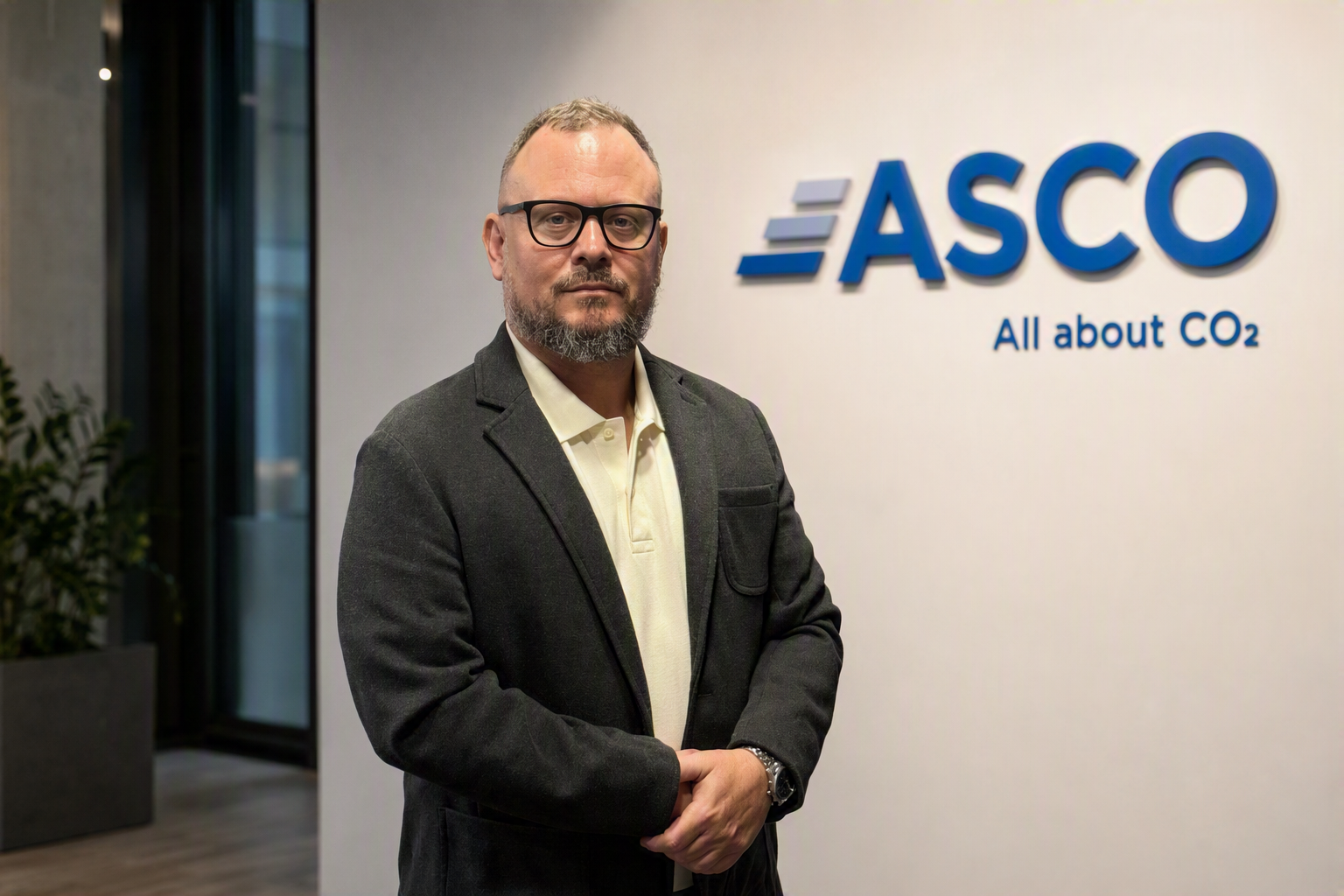
Thomas Gardner on customer expectations, service excellence, and the future of CO₂ solutions in North America
Since taking over as Managing Director of ASCO USA earlier this year, Thomas Gardner has focused on understanding the business from the inside out. He has spent much of his time with customers, employees, and industry partners to identify where ASCO USA can create more value in a market that is becoming more demanding, more service-driven, and more focused on supply security. "My focus has really been on understanding the business, listening to our team and customers, and looking at where we can improve," Thomas explains. “The first few months have been busy, but very positive.”
That listening-first approach has helped guide ASCO USA into its next phase of development. "The biggest change has been moving from stabilization into a more focused growth phase," Thomas says. Over the past months, this has meant strengthening sales activities, expanding the service organization, and continuing to develop the dry ice and CO₂ equipment business with a clearer focus on customer needs. At the same time, ASCO USA is preparing the market for a broader use of ASCO’s CO₂ recovery expertise, an area that can help customers improve supply security and create value from CO₂ streams that already exist in their operations.
For Thomas, however, success is about much more than selling equipment.
"We do not want to simply sell equipment. We want to support our customers throughout the life of that equipment."
Reliability, Service, and Long-Term Value
In conversations across North America, Thomas sees a clear shift in how customers evaluate equipment suppliers. The focus is no longer only on machine performance or purchase price. Customers want to understand whether a supplier can support their operation over time, respond when technical issues arise, and help reduce complexity in daily production.
"Customers are looking for more than a machine that simply does the job," Thomas says. "They want to know who stands behind it, how quickly they can get support, and whether the supplier understands the realities of their operation."
This perspective is shaping how ASCO USA approaches customer support. The focus is not only on keeping equipment available, but on making support more predictable and useful in daily operation. For customers, this becomes relevant when production depends on fast troubleshooting, clear technical communication, reliable access to spare parts, and support that continues long after installation.
"The equipment remains the foundation," Thomas adds. "But the experience around it matters just as much: how quickly problems are resolved, how clearly we communicate, and how reliably we support production over time."
The Next Generation of Dry Ice Production
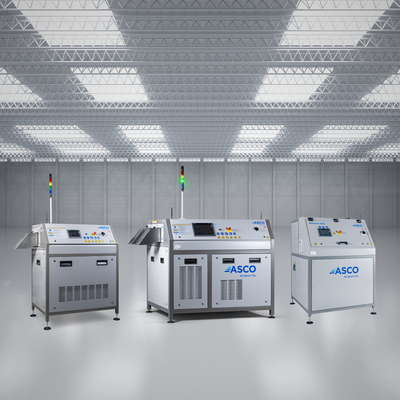
The changing expectations of customers are also reflected in ASCO's latest equipment developments. One example is the new EVO-Series, the next generation of ASCO's proven dry ice pelletizers. "The idea was to keep the reliability and production quality customers already know, while making the equipment more modern, flexible, and easier to use," Thomas explains.
The new series is therefore not only a technical evolution. It responds to a daily reality many producers know well: machines need to run reliably, maintenance windows are limited, and operators need clear information when something changes in the process. Thomas sees this as a practical design question: equipment should help teams act faster, maintain more confidently, and keep production under control even when resources are limited.
"We spend a lot of time talking with customers about everyday challenges," Thomas says. “Reliability is expected. What often makes the difference is how quickly people can identify an issue, maintain the equipment, and get production running again.”
This is where the EVO-Series becomes relevant for customers who want to increase production reliability without adding unnecessary complexity. Better access to key machine areas can make maintenance more manageable. Clearer machine information helps operators understand what is happening during production. Remote support capabilities give service teams a better basis for troubleshooting before they are on site.
In that sense, the EVO-Series is more than a product update. It shows where Thomas believes dry ice production technology needs to move: toward machines that deliver output efficiently while also supporting the people who operate, maintain, and service them every day.

CO₂ Recovery Gains Momentum in North America
ASCO USA is also expanding its offering beyond dry ice production equipment by bringing ASCO’s CO₂ recovery expertise to the North American market. Thomas sees this as a logical next step. Many companies already generate CO₂ within their operations, but the value of that gas often depends on what can be done after it has been captured or separated.
"In many cases, the CO₂ is already being produced," he says. "The question is what happens next. If the gas can be recovered and processed properly, it can become a usable resource again instead of remaining an unused by-product."
According to Thomas, this shift is especially relevant in a market where CO₂ availability can directly influence production planning, operating costs, and customer commitments. Recovery does not solve every supply challenge, but it can give suitable companies more control over part of their CO₂ supply and help them create value from a stream that already exists in their process.
From Capture to Market
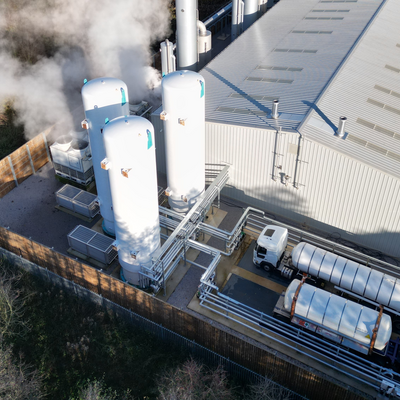
While carbon capture often receives most of the attention, Thomas emphasizes that capturing CO₂ is only the beginning. For many companies, the real challenge starts after the gas has been separated from the process stream. It needs to be conditioned, liquefied, stored safely, and prepared for practical use, either within the company’s own operations or as a product for external customers.
"Capturing the CO₂ is only the first step," Thomas explains. "After that, companies need to understand how it can be processed, stored, tested, transported, and ultimately used or sold. That is often where a project becomes more complex."
Thomas sees this full-chain perspective as one of the key differences in CO₂ recovery projects. A project is not only an equipment decision. It also involves gas quality, process integration, storage capacity, logistics, and market access. In North America, ASCO USA can combine local customer proximity with ASCO’s established recovery, liquefaction, and application know-how.
"In simple terms, we help customers move from capture to market," Thomas says. "That means looking at the full chain, not just one technical step. Our role is to help customers understand how recovered CO₂ can become a usable product with real operational or commercial value."
Building for the Future
Looking ahead, Thomas sees ASCO USA entering a phase where growth needs to be built deliberately. The North American market offers significant potential, but the priority is not simply to expand faster. The goal is to build an organization that can grow with its customers, respond to changing market needs, and support more complex CO₂ and dry ice applications over time.
"My goal is for ASCO USA to be recognized not only as an equipment supplier, but as one of the most trusted partners for CO₂ and dry ice solutions in North America."
To get there, Thomas believes the organization needs to focus on the structures customers depend on after the purchasing decision: reachable service contacts, stronger technical support, faster access to knowledge from the wider ASCO organization, and closer guidance when customers evaluate new dry ice or CO₂ recovery projects. Future growth, in his view, will come from customers who need more than equipment alone. They will need partners who understand production realities, supply challenges, and the practical value of using CO₂ more efficiently.
"To our long-time customers and partners, I would simply say thank you. Your trust, feedback, and support have played an important role in the growth of ASCO USA. For companies that are just getting to know us, our message is clear: We want to be more than an equipment supplier. We want to be a long-term partner that helps customers keep their operations running, solve CO₂-related challenges, and find new opportunities for their business."


 +41 71 466 80 80
 info@ascoco2.com
 Newsletter
 LinkedIn