 Inquiries & Help
























Dry ice in the logistics industry: reliable cooling on every transport route
Whether food, pharmaceuticals or sensitive industrial products - the requirements for temperature-controlled transportation are increasing. Companies are looking for solutions that are flexible, reliable and environmentally friendly. Dry ice has long been more than just an insider tip in logistics. It offers many advantages over conventional cooling methods and ensures that heat-sensitive products arrive safely at their destination.

(© Photo by Marcin Jozwiak on Unsplash)
Versatile applications of dry ice in logistics
Dry ice is used in logistics wherever reliable and uninterrupted cooling is required - especially when transporting temperature-sensitive goods. It is used particularly frequently in the following areas:
- • Food transportation: fresh meat, fish, frozen products or baked goods can be cooled efficiently with dry ice - ideal for retail or mail order.
- • Pharmaceutical and medical technology: Vaccines, blood samples or laboratory samples must remain at the exact temperature. Dry ice is ideal for safe and hygienic cooling during transportation.
- • E-commerce and express delivery: In online retail, dry ice is often used to deliver sensitive goods chilled within 24 hours.
- • Technical products: Electronic components or chemicals also benefit from reliable refrigeration with dry ice - without the risk of moisture damage.
Advantages of dry ice compared to "conventional" cooling systems
Dry ice scores points in logistics with several properties that set it apart from water ice, cooling chambers or gel packs:
- • Extremely low temperature: At -78.5 °C, dry ice provides a significantly colder environment than other cooling systems and offers three times the cooling capacity of conventional water ice.
- • Residue-free: During the sublimation process, no water remains from the dry ice itself - minimizing the risk of moisture damage to sensitive goods or packaging.
- • Independent of electricity: Dry ice requires no energy source and works without an external supply, even over long transport distances.
- • Flexible application: Whether in polystyrene containers, containers or insulated boxes - dry ice can be used individually.
- • Hygienic and odorless: Particularly important in the food and pharmaceutical industries.
- • Cooling capacity tailored to requirements: The cooling capacity can be flexibly adapted to the quantity and shape of the dry ice through targeted and needs-based use - this saves space, weight and reduces costs.
How to use dry ice efficiently
To exploit the full potential of dry ice in logistics, it is important to handle it correctly. It is important to calculate the right quantity for the transport volume and to use suitable insulated packaging. The choice of the right pellet or block shape and the storage temperature before use also have an influence on the shelf life. Companies that regularly work with dry ice benefit from their own dry ice production or a flexible delivery model that works according to demand.
ASCO - your partner for dry ice in logistics
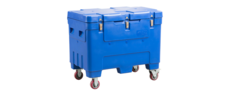
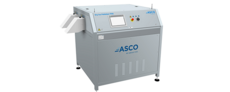
You are a specialist in temperature-controlled transportation - we are experts in dry ice. Together we ensure that your logistics chain runs smoothly. ASCO offers you everything you need for safe, efficient and reliable refrigeration: from high-performance dry ice pelletizers, CO₂ storage tanks and insulated shipping boxes to the right CO₂ supply. Whether in-house production, rental solutions or accessories - we provide comprehensive advice and supply the right technology for your application. With our “Carefree” offer, you also benefit from a unique 360° service that you can only get from ASCO - including maintenance, service and CO₂ supply.
Conclusion: Dry ice is the ideal alternative to conventional coolants
In logistics, punctuality, product safety and efficiency are what count. Dry ice fulfills all of these requirements and offers a flexible, electricity-independent solution for temperature-controlled transported goods. Those who rely on dry ice in refrigerated logistics reduce risks, save resources and increase the reliability of the supply chain. A real added value for companies with high demands on quality and hygiene.