 Inquiries & Help

















Michael Hackner, Managing Director «CDS Hackner GmbH»»
Please briefly introduce yourself and the company.
My name is Michael Hackner and I am the managing director of “CDS Hackner GmbH”. I have been with the company since 1997.
“CDS Hackner GmbH” specializes in the processing and utilization of slaughter by-products, such as meat, offal and gastrointestinal packages from slaughtered animals. These products are used as food for humans and pets.
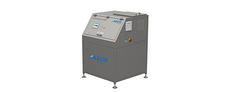
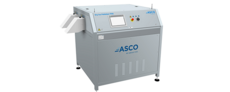
You use an ASCO Pelletizer P28 to produce dry ice. What is the dry ice used for and how much do you produce?
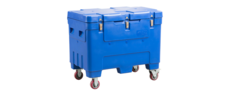
The dry ice is required for the transportation of frozen food for dogs. The “Graf Barf” brand is a brand of “CDS Hackner GmbH” and has been successfully established on the market since 2014. It stands for high-quality raw food cubes in food quality and the first complete barf menues made from whole pieces. Depending on the order situation, we need between 300 and 2000 kg of dry ice per day, on average around 1000 kg per day. The machine running times are adjusted accordingly.
How do you estimate the development of the production volume of dry ice?
We assume that the production volume of dry ice at our company will decline. This is due to several factors: CO2 deliveries are becoming increasingly difficult and expensive, some parcel service providers no longer take dry ice and parcel service providers are generally becoming less reliable and more expensive. We therefore prefer to use temperature-controlled delivery with deep-freeze carriers instead of parcel shipping in future.
What are the advantages of frozen food over wet food, apart from less waste and a more targeted diet?
Raw meat feeding is based on the natural diet of dogs and is therefore species-appropriate and health-promoting. “Graf Barf” deliberately avoids artificial additives and fillers, which are often the cause of intolerances and allergies. It is a natural food, similar to what wolves find in nature, but as a convenience product for dog owners.
What do you see as the advantages of dry ice compared to other cooling methods?
Dry ice offers lower temperatures with a similar cooling time compared to other coolants such as gel packs.
What measures does the company pursue in the area of sustainability?
The holistic, meaningful utilization of a slaughtered animal as food is fundamentally a very sustainable corporate purpose, it saves disposal and thus energy and CO2. Our new packaging from 2025 is fully recyclable and can be made from at least 10% recycled material. We are increasingly covering our energy requirements from renewable forms of energy. We record and evaluate our resource consumption and energy use and strive for significant optimizations to keep our CO2 footprint to a minimum.
Are future projects or innovations planned? If so, which ones?
Yes, we are planning to build a new, energy-optimized central cooling system and further process optimizations in production. These measures go hand in hand with investments in automation technologies. Our aim is to adapt production volume and intensity to the new challenges and sustainable changes in our industry.
What is a big challenge for you?
Our industry is undergoing considerable change. Adapting to this change requires constant review of our capacities in all areas and critical scrutiny of all processes. These challenges require our full attention; quick yet well-founded decisions must be made in order to remain profitable in the market.

«CDS Hackner GmbH» in Crailsheim, Baden-Württemberg, Germany
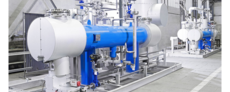
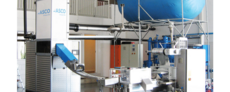
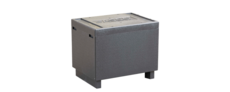
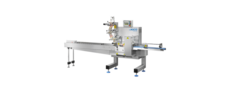
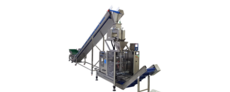
ASCO note: In addition to the P28i, “CDS Hackner” also uses an ASCO CO2 Tank and an ASCO Pellets Bagging Machine PBM.