 Inquiries & Help


















Let’s start with a short introduction: Who are you and what is your role at Subligel?
Together with Mr. Romain Richert, I am co-managing partner at Subligel. We jointly oversee the strategic development and day-to-day operations of the company.
Can you briefly describe Subligel’s core activities and your mission as a company?
Subligel is specialized in the production and distribution of dry ice – this is both our main focus and our passion.
When and why did Subligel start doing business with dry ice?
We began producing dry ice between 1994 and 1996. Since then, we’ve consistently developed our know-how and expanded our capabilities in this field.
How has the dry ice market evolved in France in recent years?
Currently, the industrial sector in France is slowing down – we like to say it’s “running on three cylinders.” This is due in part to offshoring of production and the shutdown of energy-intensive industries, such as foundries, which used to require large amounts of dry ice for cleaning core boxes. On the other hand, we are also seeing positive trends: dry ice blasting is gaining awareness and acceptance across the country. While we’re not yet on the same level as our German neighbors, market opportunities have significantly improved compared to ten years ago. One example: applications like deflashing of plastic parts are gaining traction.
What are the key industries you serve with your dry ice products?
We primarily serve customers from the automotive, pharmaceutical, and plastics industries.
What trends do you observe in the dry ice industry? Are there any innovative or unusual applications of dry ice that you’ve seen recently?
Yes – deflashing of plastic parts is one of the most exciting new use cases that is currently growing rapidly among our customer base. Deflashing refers to the removal of excess material (flash) that remains on plastic components after molding. Dry ice blasting offers a clean, efficient, and non-abrasive way to remove this residue, making it ideal for high-precision parts used in industries like automotive and electronics.
You manage the full process from production to delivery. What are the biggest advantages for your customers?
Having full control over production and logistics is a key strength. Dry ice is a sensitive and perishable product – timely and accurate deliveries are absolutely essential. That’s the only way we can ensure optimal quality at exactly the moment it’s needed.
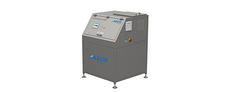
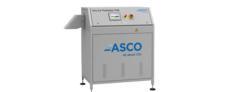
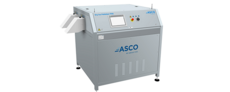
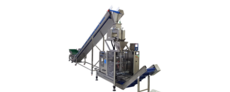
You use an ASCO dry ice machine BP425i – can you tell us more about how it supports your production?
We chose the BP425i because it is the only machine on the market that meets all our requirements: it produces 5 kg blocks in various thicknesses and pellets in various sizes from 3 mm to 16 mm.
For us, this machine is a true multifunctional tool – we like to refer to it as the “Swiss Army knife of dry ice production.”
What were the main reasons for choosing ASCO equipment?
ASCO stands for user-friendly design, high efficiency, and maximum flexibility in production. All of our dry ice production equipment is from ASCO – we currently operate five BP machines, four P600s, and one EVO machine. The reliability and versatility of the ASCO machines have convinced us for many years.
More information about the ASCO BP425i