Inquiries & Help
























Industrial Maintenance 4.0: Why dry ice blasting fits perfectly into modern maintenance concepts
The requirements for industrial maintenance have changed significantly in recent years. Whereas maintenance used to be carried out reactively—i.e., only after a malfunction had already occurred—modern companies now rely on intelligent concepts such as predictive maintenance, automated monitoring systems, and digital plant analyses. The goal: to reduce downtime, increase operational reliability, and make production processes more efficient. One cleaning technology that is playing an increasingly important role in this is dry ice blasting. It combines high cleaning performance with maximum protection of the equipment and fits perfectly into the logic of modern, data-supported maintenance.

Dry ice blasting as part of Maintenance 4.0
Industrial maintenance 4.0 is based on transparency, real-time data, and predictable processes. This also means that cleaning and maintenance must be predictable, fast, and cause minimal disruption. This is exactly where dry ice blasting comes into its own: The method cleans surfaces without water, chemicals, or abrasives and allows for a cleaning process that neither damages production lines nor causes long downtimes. Since dry ice sublimates immediately and leaves no residue, there is no need for follow-up cleaning—a decisive advantage for automated maintenance processes, where every unnecessary step impairs efficiency.
Predictive maintenance: Clean systems for more accurate diagnoses
In modern production facilities, sensors, digital twins, and analysis tools work hand in hand. However, these systems are sensitive to contamination, oil films, and dust deposits. If a machine is not cleaned regularly, measured values can be distorted, which in turn affects the accuracy of predictive maintenance models.
Dry ice blasting ensures that machines, plant components, and measuring systems remain clean—without having to dismantle them for time-consuming cleaning processes. The method removes deposits precisely and without material removal, which is particularly important for sensors, electronics, machine tools, or sensitive molds. This ensures that measurement data remains reliable and significantly improves the basis for data-driven maintenance decisions.
Less downtime thanks to fast and gentle cleaning
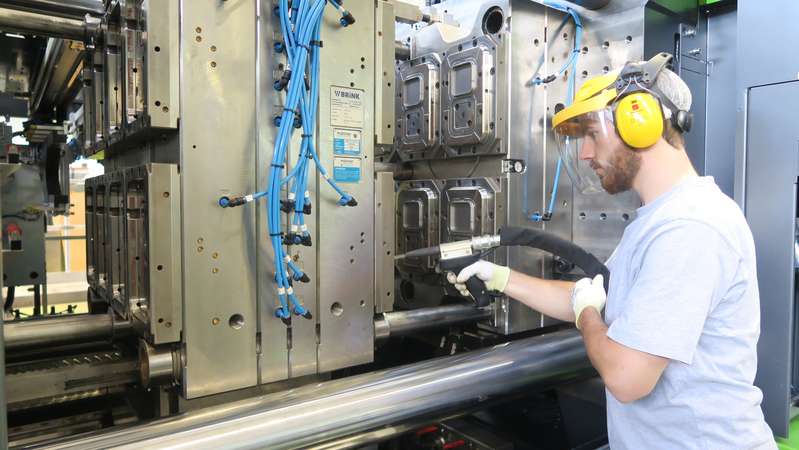
A key advantage of dry ice blasting in industrial maintenance is the significant reduction in downtime. Since the blasting is dry, systems can often be put back into operation immediately after cleaning. This is a major difference to conventional methods such as high-pressure cleaning or chemical cleaning, which require drying times or long downtimes. In addition, many components can be cleaned while still installed, which further speeds up the process. Dry ice blasting offers a measurable economic advantage, especially in industries where every minute of production downtime incurs high costs, such as the food industry, plastics processing, automotive production, and the pharmaceutical industry.
Gentle cleaning for sensitive surfaces and components
While abrasive cleaning methods can damage surfaces, dry ice blasting is non-abrasive. The pellets sublimate on impact, loosening stubborn dirt without damaging the material itself. This is crucial for modern machines, molds, and production lines, which consist of high-precision and expensive components. Tools, molds, electrical control cabinets, conveyor belts, and sensitive seals can be cleaned without causing mechanical or thermal damage. This gentle treatment of materials increases the service life of the equipment and thus contributes directly to a more sustainable maintenance strategy.
Integration into modern maintenance processes
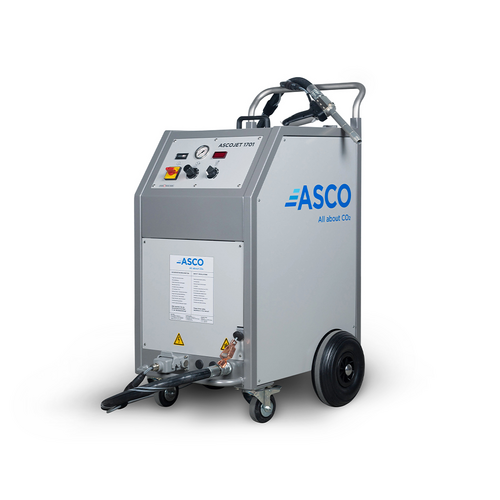
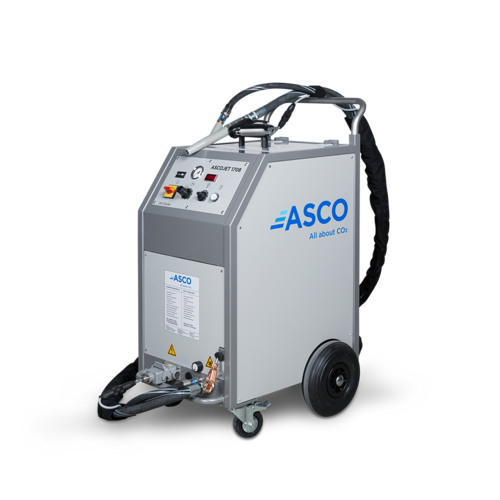
Dry ice blasting can be easily integrated into existing maintenance schedules and is suitable for both regular cleaning intervals and on-demand applications. Companies that already rely on automated maintenance systems benefit in particular from the high predictability of the process. Since the process is clean, fast, and safe, it can be carried out during planned shutdowns or shift breaks. The method is also increasingly being used in TPM and lean management strategies to increase plant availability and process reliability. The use of mobile blasting equipment allows the cleaning team to respond flexibly to production needs—a clear advantage in the age of lean production processes.
Conclusion
Industrial maintenance 4.0 requires cleaning technologies that are fast, efficient, gentle on materials, and predictable. Dry ice blasting meets all these requirements and fits perfectly into modern maintenance concepts. By combining precise cleaning, reduced downtime, and protection of sensitive components, the process supports data-based maintenance processes and increases the reliability of industrial plants. Companies that rely on dry ice blasting are laying the foundation for a sustainable, forward-looking, and economically strong production environment—and equipping themselves for the challenges of Industry 4.0.