Inquiries & Help


















CCUS - Key technology for a more climate-friendly industry and energy supply
Carbon Capture, Utilization and Storage (CCUS) is one of the most relevant technologies for reducing CO₂ emissions and therefore a key component in the fight against climate change. In the following, we explain what CCUS is, how it works, what benefits it offers, what the current state of the technology looks like and what role industrial companies play in it. We also present how ASCO is actively contributing to the sustainable use of CO₂ with its CO₂ recovery plants.
What does CCUS stand for?
CCUS stands for carbon capture, utilization, and storage. The technology encompasses all processes that capture CO₂ directly at the source of emission and then either utilize it or store it permanently to prevent its release into the atmosphere. In contrast to traditional emission reductions, which focus primarily on avoidance, CCUS also enables existing CO₂ emissions to be actively captured, thereby significantly improving the carbon footprint of industry and energy production. According to the International Energy Agency (IEA), CCUS could help reduce global CO₂ emissions by almost 20% (around 37 gigatons of CO₂ per year by 2050) while reducing the cost of climate protection by around 70%.
How does CCUS work?
The process of carbon capture, utilization, and storage (CCUS) comprises several phases: the capture, processing, and finally either the utilization or storage of CO₂. Each of these steps plays a crucial role in reducing greenhouse gas emissions and the sustainable transformation of industrial processes.
1. CO₂ recovery & processing
In the first step, carbon dioxide is removed from the exhaust gases directly at the source of emission, such as industrial plants or power stations. Different technologies are used depending on the concentration and composition of the exhaust gases. These include chemical absorption processes with solvents, membrane separation processes, and adsorption methods. The aim is to isolate the CO₂ as efficiently and purely as possible in order to prepare it for further use or storage.
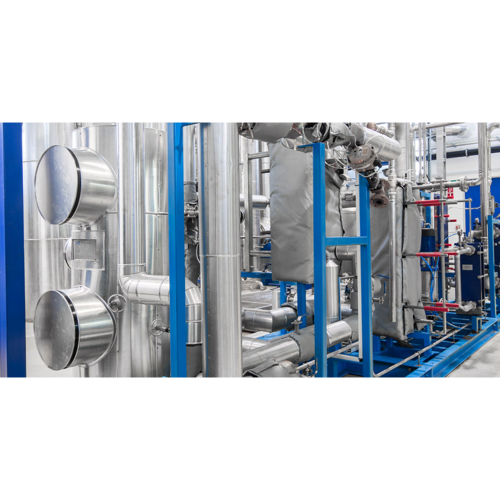
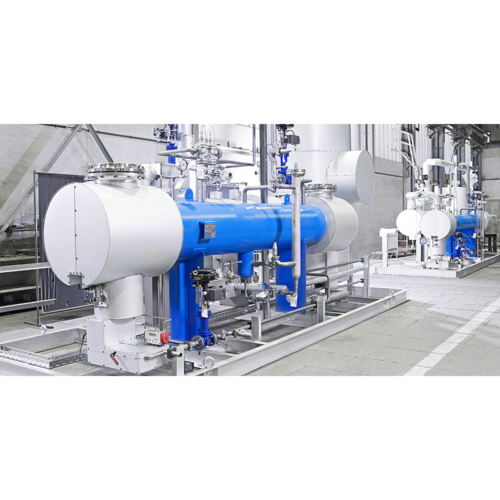
ASCO uses the chemical CO₂ recovery process of amine scrubbing. This process is considered particularly mature (highest “Technology Readiness Level” 9) and has been used reliably in continuous industrial operation for many decades. In this process, the flue gas is brought into contact with an amine solution in a so-called absorber. The amine specifically binds the CO₂ from the flue gas. The CO₂-enriched solution then flows into another plant, the stripper column. There, the liquid is heated with hot steam, causing the CO₂ to separate from the amine again. The released CO₂ is then collected, compressed, dehydrated, and purified before finally being liquefied and stored in tanks for storage or transport.
2. CO₂ utilization:
A particularly forward-looking aspect of CCUS is the use or recycling of recovered CO₂ as a valuable resource. Instead of allowing it to escape into the atmosphere, CO₂ can be reused in numerous industries—an important contribution to the circular economy.
- • In the chemical industry, CO₂ serves as a raw material for the production of methanol, urea, and polymers. These products are used in fertilizers, plastics, and pharmaceuticals.
- • In combination with green hydrogen, CO₂ can be processed into synthetic fuels such as e-methane or e-kerosene. These climate-neutral alternatives are particularly important for aviation and heavy-duty transport.
- • CO₂ is also used in the building materials industry: it can be mineralized and permanently bound in cement and concrete production. This not only reduces emissions, but also improves some of the material properties.
These diverse applications demonstrate that CO₂ is not just a waste product, but can also be a valuable raw material—provided it is used intelligently and sustainably.
3. CO₂ storage:
If direct use is not possible or economically viable, the captured CO₂ is stored permanently. This usually takes place in geological formations such as depleted natural gas or oil fields or deep saltwater aquifers. Storage prevents the CO₂ from entering the atmosphere and thus contributes to long-term emission reduction.
One of the best-known projects is the Sleipner field in Norway, which began operations in 1996 and is operated by Equinor. Since then, Equinor has been injecting around 1 million tons of CO₂ annually into the Utsira formation in the North Sea, making Sleipner the first commercial CCUS project. After a period of uncertainty and project cancellations in the 2010s, mainly due to high costs and a lack of political support, CCUS has gained momentum again in recent years thanks to the European Union, which sees CCUS as a key technology for achieving climate neutrality by 2050. Programs such as the EU Innovation Fund and initiatives in the North Sea coastal states are promoting new CO₂ storage projects, particularly through cooperation between industry and governments. Several large CCUS projects are currently underway, such as Northern Lights in Norway, which transports and stores CO₂ across borders, as well as new projects in the Netherlands, the UK, and Denmark.

Benefits and advantages of CCUS
CCUS offers a wide range of advantages. Greenhouse gas emissions can be significantly reduced, particularly in emission-intensive industries such as steel or cement production. CCUS also acts as an important bridging technology for the energy transition by making fossil resources with a lower carbon footprint usable. Furthermore, the use of captured CO₂ opens up new economic opportunities by allowing CO₂ to be used as a raw material in a wide variety of areas. CCUS offers a practical and sustainable solution, particularly in industries where it is difficult to completely avoid emissions, known as “hard-to-abate industries.”
Current status and future prospects of CCUS
CCUS is becoming increasingly important worldwide. Many projects are still in the demonstration or pilot stage, but the first large-scale plants are already in operation – primarily in North America, Europe, and Asia. The technology is constantly evolving, leading to falling costs and increasing efficiency. Political measures such as CO₂ taxes and support programs such as the EU Innovation Fund are helping to promote the expansion of CCUS. In the future, CCUS is likely to become more integrated into industrial value chains, opening up increased opportunities for CO₂ utilization. Technological progress coupled with political incentives makes CCUS a central element of modern climate strategies.
Opportunities for industrial companies
Industrial companies should actively integrate CCUS into their sustainability strategy. This initially involves a detailed analysis of their own emission profiles in order to identify suitable technologies for recovery and utilization. Collaboration with technology providers, research institutions, and infrastructure projects is crucial for successful implementation. Investments in CO₂ recovery plants and utilization and storage solutions enable a significant improvement in the carbon footprint. At the same time, this opens up new business areas. Transparent communication of CCUS measures also strengthens the sustainable image among customers and partners.
ASCO – Your partner for efficient CO₂ recovery
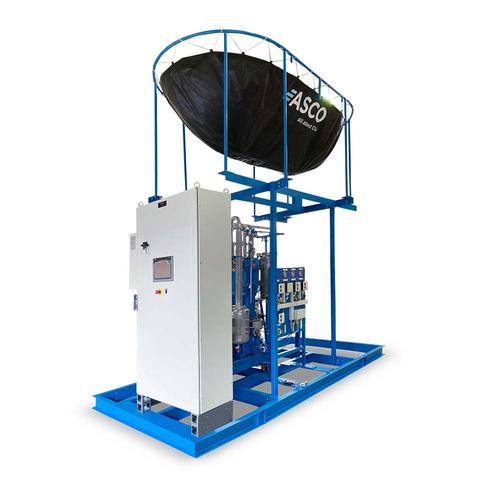
ASCO offers innovative CO₂ recovery systems that are specially tailored to the needs of industrial customers. Our solutions enable the efficient recovery, processing, and use of CO₂ as a valuable resource. With many years of experience and technical expertise, ASCO supports companies in achieving their climate goals while increasing resource efficiency. In this way, we are making an active contribution to the sustainable transformation of industry.